logo
제품 소개페로 규소 합금

Ferrosilicon Nitride Alloy FeSiN | Bonding Additive for Refractories in High-Temperature Slag Resistance Conditions

제가 지금 온라인 채팅 해요

Ferrosilicon Nitride Alloy FeSiN | Bonding Additive for Refractories in High-Temperature Slag Resistance Conditions

Ferrosilicon Nitride Alloy FeSiN | Bonding Additive for Refractories in High-Temperature Slag Resistance Conditions
Ferrosilicon Nitride Alloy FeSiN | Bonding Additive for Refractories in High-Temperature Slag Resistance Conditions Ferrosilicon Nitride Alloy FeSiN | Bonding Additive for Refractories in High-Temperature Slag Resistance Conditions Ferrosilicon Nitride Alloy FeSiN | Bonding Additive for Refractories in High-Temperature Slag Resistance Conditions Ferrosilicon Nitride Alloy FeSiN | Bonding Additive for Refractories in High-Temperature Slag Resistance Conditions Ferrosilicon Nitride Alloy FeSiN | Bonding Additive for Refractories in High-Temperature Slag Resistance Conditions

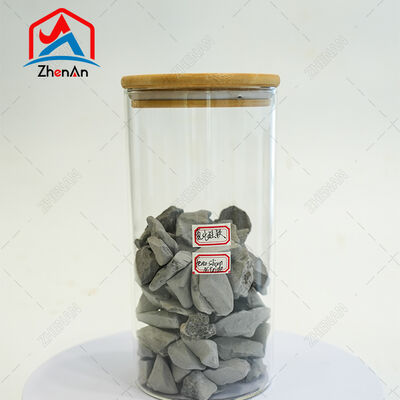
큰 이미지 :  Ferrosilicon Nitride Alloy FeSiN | Bonding Additive for Refractories in High-Temperature Slag Resistance Conditions

제품 상세 정보:
원래 장소: 중국
브랜드 이름: ZHENAN
인증: ISO9001
모델 번호: FeSi 질화물
결제 및 배송 조건:
최소 주문 수량: 협상 가능
가격: 협상 가능
포장 세부 사항: 1MT 큰 가방 또는 고객 요청에 따라
배달 시간: 지불금을 받은 후 영업일 기준 5-10일
지불 조건: L/C, T/T, 웨스턴 유니온
공급 능력: 2000MT/월

Ferrosilicon Nitride Alloy FeSiN | Bonding Additive for Refractories in High-Temperature Slag Resistance Conditions

설명
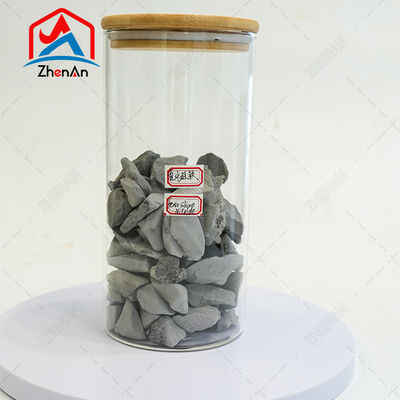
재료: FeSi 질화물 크기: 10-50mm
실리콘 함량: 70-80% 철분 함량: 20-30%
질소 함량: 20-35% 벌크 밀도: 2.5-3.2g/cm3
강조하다:

Ferrosilicon Nitride alloy for refractories

,

FeSiN bonding additive high-temperature

,

Ferro Silicon Alloy slag resistance

Ferrosilicon Nitride Alloy FeSiN | Bonding Additive for Refractories in High-Temperature Slag Resistance Conditions
Ferrosilicon Nitride (FeSiN) is a functional alloy additive produced by controlled nitridation of ferrosilicon, resulting in a composite Fe-Si-N system with chemically stable nitrogen-containing phases. It is engineered to participate in refractory bonding reactions under high-temperature service conditions.
In refractory engineering, FeSiN is primarily used as a bonding and performance-enhancing additive in furnace linings exposed to aggressive slag environments, where both chemical corrosion and thermal stress are present.
Importance of Bonding Strength in High-Temperature Slag Conditions
In metallurgical furnaces, refractory structures are continuously exposed to:
  • Molten slag chemical attack
  • Thermal cycling and expansion stress
  • Mechanical erosion from liquid metal flow
  • Long-term structural fatigue
Insufficient bonding strength leads to:
  • Grain separation inside the refractory matrix
  • Slag penetration through weak interfaces
  • Structural layer delamination
  • Accelerated lining failure
FeSiN Bonding Mechanisms in Refractories
Formation of Stable Nitride Bonding Phases
During high-temperature exposure, FeSiN contributes to the formation of Si₃N₄-based phases that act as ceramic bridges between refractory particles.
Interface Strengthening Between Phases
Improves adhesion between alumina, silicon carbide, and carbon phases, reducing weak interfacial zones.
Matrix Reinforcement Under Thermal Load
Stabilizes the internal matrix, preventing bond degradation during repeated heating cycles.
Reduced Microvoid Connectivity
By densifying the structure, it limits pathways for slag penetration.
Applications in Furnace Lining Materials
Furnace linings require materials that can maintain both chemical and mechanical integrity over long service periods. FeSiN is used because it:
  • Enhances internal bonding stability
  • Improves resistance to slag attack
  • Strengthens refractory matrix cohesion
  • Supports long-term structural integrity under heat
This makes it suitable for blast furnaces, ladles, and high-temperature runners.
Structural Cohesion Improvement in Refractory Bricks
FeSiN significantly improves structural cohesion by:
  • Strengthening grain-to-grain bonding
  • Reducing internal separation under stress
  • Improving load transfer across phases
  • Stabilizing microstructure during sintering and service
This results in more uniform and durable refractory bricks.
Slag Infiltration Reduction
FeSiN reduces slag infiltration through:
  • Lowering surface wettability to molten slag
  • Creating dense nitride-rich protective phases
  • Blocking capillary penetration paths
  • Increasing overall matrix compactness
Role of Nitrogen in Bonding Performance
Nitrogen is the key functional element in FeSiN systems. It contributes by:
  • Forming stable ceramic nitride networks
  • Increasing high-temperature phase stability
  • Enhancing interparticle bonding strength
  • Improving resistance to thermal decomposition
Refractory Matrix Integrity Improvement
FeSiN improves matrix integrity by:
  • Reinforcing internal bonding networks
  • Stabilizing phase distribution in the matrix
  • Reducing microcrack formation
  • Enhancing resistance to thermal and mechanical stress
Chemical Corrosion Resistance Enhancement
FeSiN improves chemical corrosion resistance by:
  • Forming chemically stable nitride barriers
  • Reducing direct slag-matrix reaction contact
  • Limiting diffusion of corrosive species
  • Stabilizing surface reaction layers
Technical Specifications
ItemSpecification
Product NameFerrosilicon Nitride Alloy
Chemical SystemFe-Si-N
Nitrogen Content25-35%
FunctionBonding / slag resistance additive
Particle Size0-3 mm / customized
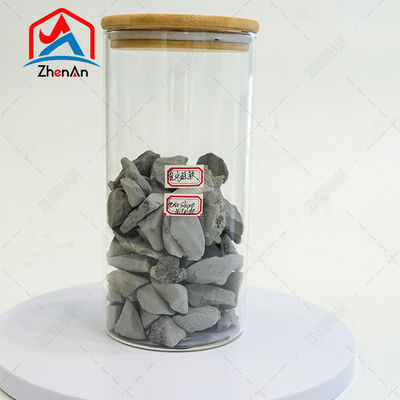
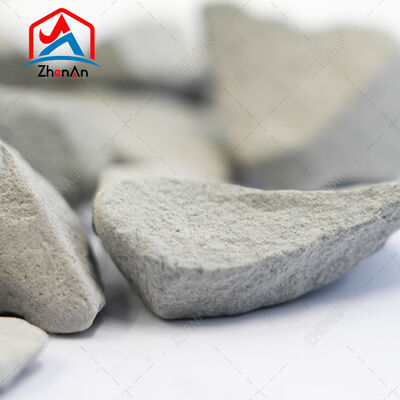
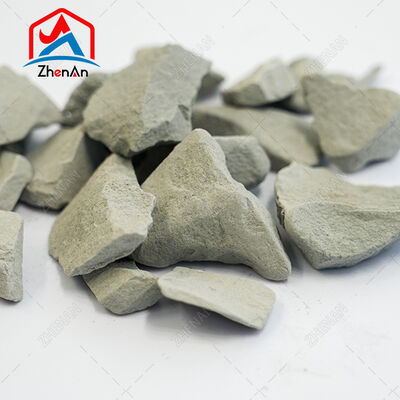
AppearanceGrey granular solid
ApplicationHigh-temperature refractory systems
FeSiN vs Alternative Bonding Additives
ParameterFeSiN AlloyAlumina-Silicate Additives
Bonding StrengthHighMedium
Slag ResistanceStrongModerate
Matrix StabilityHighLower
Thermal Shock ResistanceImprovedLimited
Chemical Corrosion ResistanceHighMedium
Industrial Furnace SuitabilityHigh-performance systemsGeneral applications
Product Delivery, Packaging, and Logistics
ZhenAn supplies Ferrosilicon Nitride Alloy in controlled granular form suitable for industrial refractory production.
Standard Packaging
  • 25kg moisture-resistant bags
  • 1MT jumbo bags
  • Reinforced export pallet packaging
Shipment Documentation
  • COA (chemical composition report)
  • Nitrogen content certification
  • Particle size distribution report
  • Quality consistency documentation
Logistics are optimized for steel plant and refractory manufacturer supply chains requiring stable material performance.
Frequently Asked Questions
How does FeSiN act as a bonding additive in refractories?
It forms nitride-based ceramic phases that strengthen particle bonding.
Why is bonding strength important in slag conditions?
Because weak bonding leads to slag penetration and structural failure.
Can FeSiN improve structural cohesion in bricks?
Yes, it enhances grain bonding and matrix stability.
How does FeSiN reduce slag infiltration?
By densifying structure and forming protective nitride phases.
What role does nitrogen play in bonding?
It forms stable ceramic networks that reinforce structure.
Why is FeSiN used in furnace linings?
To improve durability, bonding, and slag resistance.
How does FeSiN improve matrix integrity?
It stabilizes internal structure and reduces microcracks.
Can FeSiN improve corrosion resistance?
Yes, by forming chemically stable protective layers.
Why Industry Buyers Choose ZhenAn FeSiN
ZhenAn provides Ferrosilicon Nitride Alloy engineered for stable high-temperature bonding, strong slag resistance, and long-term refractory performance in demanding industrial furnace systems. Our controlled production ensures consistent nitrogen content and reliable batch quality.

연락처 세부 사항
Zhenan Metallurgy Co., Ltd

담당자: Mr. xie

회사에 직접 문의 보내기 (0 / 3000)